The traditional image of a medical student involves white coats, stethoscopes, and long hours in a sterile lab. However, the landscape of healthcare education has undergone a seismic shift. As universities across the globe embrace hybrid and remote learning models, the “clinical” side of education is increasingly being supplemented—and sometimes overshadowed—by a massive surge in written requirements.
For the modern undergraduate, the challenge is no longer just memorizing anatomy; it is the ability to articulate complex clinical reasoning through a screen. This transition has turned the medical degree into one of the most writing-intensive programs in higher education, creating a unique set of pressures for those balancing domestic life with professional aspirations.
The Evolution of the “Reflective Practitioner”
In a traditional classroom, a professor could gauge a student’s understanding through a quick Q&A session or a bedside demonstration. In a remote environment, that immediate feedback loop is broken. To compensate, educators have turned to “Reflective Journals” and “Case Analysis Papers” to verify that students are actually absorbing the material.
This shift means that every hour spent watching a recorded lecture is often followed by two hours of written synthesis. The sheer volume of work can be paralyzing. Many students, particularly those in the UK facing rigorous marking rubrics, find that they simply run out of hours in the day. To maintain their mental health and academic standing, it is becoming increasingly common for students to pay someone to do my assignment to handle the general elective components of their course so they can focus entirely on their core clinical skills.
Why Remote Platforms Demand More Documentation
When learning is mediated through a Learning Management System (LMS), “participation” is no longer about raising your hand. It is about discussion board posts, peer review essays, and digital portfolios.
- Evidence of Engagement: Professors require long-form writing to prove you haven’t just left a Zoom meeting running in the background.
- Asynchronous Complexity: Without the ability to ask for clarification in real-time, assignments have become more complex and instruction-heavy, requiring longer responses to cover all required “touchpoints.”
- The Loss of Oral Exams: Many practical vivas have been replaced by written reports, doubling the word count expectations for the semester.
Comparing Traditional vs. Remote Academic Loads
| Feature | Traditional Learning | Remote/Hybrid Learning |
| Primary Assessment | In-person exams and practicals | Research papers and digital portfolios |
| Communication | Oral discussions and lab notes | Extensive discussion board threads |
| Feedback Style | Immediate, verbal cues | Delayed, lengthy written critiques |
| Writing Focus | Brief clinical summaries | Deep-dive reflective journals |
The Specific Burden on Nursing and Specialised Fields
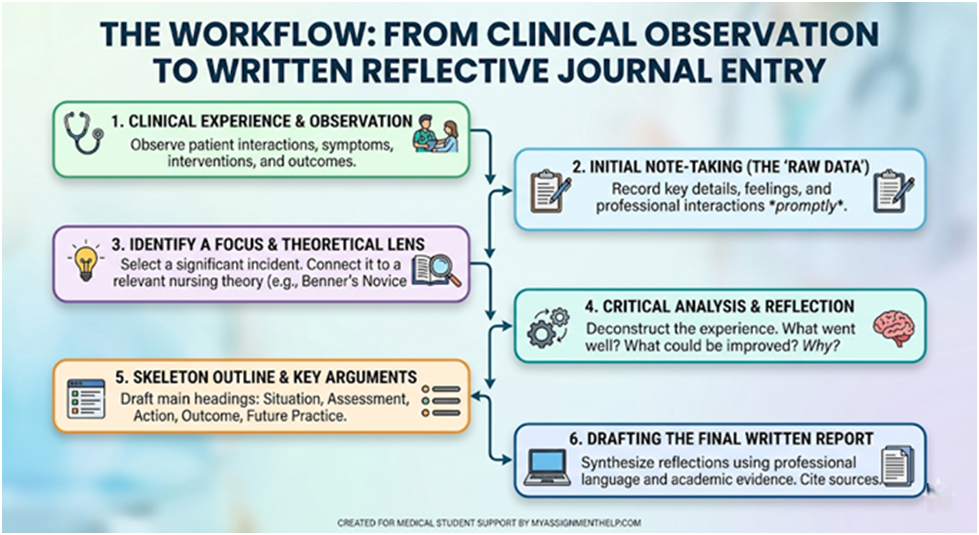
While all medical students feel the pinch, those in specialized tracks like nursing face a double-edged sword. Nursing education requires a massive amount of “Evidence-Based Practice” (EBP) papers. You aren’t just saying what a patient needs; you are writing a 2,000-word justification for a single bedside decision, cited with the latest journal articles.
Because the remote environment lacks the physical cues of a hospital ward, the written word becomes the primary method for demonstrating clinical competency. Many students struggle to bridge the gap between observing a clinical video and articulating those findings in a professional report. In these high-stakes moments, engaging with the specialized expertise available at MyAssignmentHelp for nursing assignment help provides the structural templates necessary to format clinical observations correctly. Accessing high-distinction exemplars through this resource allows students to master the professional “voice” and rigorous documentation standards required in the modern healthcare industry.
Navigating the “Global Tone” in Medical Writing
For undergraduate students, especially those in international programs, writing for a global audience adds another layer of difficulty. Medical English is specific, and academic expectations vary between the UK, Canada, and Australia.
Remote learning often strips away the “soft” learning that happens when chatting with peers in a library. Without those informal check-ins, students often feel they are writing into a vacuum. This isolation leads to a phenomenon called “Academic Tunnel Vision,” where a student spends ten hours on a single paragraph because they are terrified of getting the tone wrong.
Strategies for Managing the Digital Workload
To survive the increase in writing demands, students must treat their writing as a clinical skill that requires practice and tools.
- Batch Your Writing: Don’t try to write a whole paper at once. Set a timer for 25 minutes and focus solely on the “Methodology” or “Case History” section.
- Use Active Voice: In modern medicine, the “passive voice” is becoming outdated. Instead of “The patient was seen,” use “The clinician observed.” It’s shorter and clearer.
- The Reverse Outline: After writing a draft, summarize each paragraph into one sentence. If a paragraph doesn’t have a clear point, delete it.
- Reverse Your Schedule: Write your hardest assignments in the morning when your “clinical brain” is sharpest, leaving easier data entry for the evening.
The Future of Healthcare Education
The digital shift isn’t a temporary fix; it is the new standard. As we move toward 2027 and beyond, “Digital Literacy” will be just as important as “Health Literacy.” Students who can articulate their thoughts clearly in writing will be the ones who lead the next generation of medical research and hospital management.
The increase in writing demands is a challenge, but it is also an opportunity to develop the communication skills that save lives. Clear documentation prevents medical errors, and clear essays build the foundation for that precision.
Frequently Asked Questions (FAQ)
Q: Why are my professors asking for more essays than before?
Ans: In remote settings, written work is the primary way to “see” your thinking process. Without physical labs, essays are used to verify you’ve engaged with the theory.
Q: Does using an assignment service count as cheating?
Ans: Using services for “model papers” or “tutoring” is a legitimate way to understand complex rubrics and formatting. The goal is to use these resources as a study guide to improve your own future writing.
Q: How can I improve my writing speed?
Ans: Use the “Dictation” tool on your laptop. Sometimes speaking your clinical observations out loud and then editing the transcript is faster than staring at a blank screen.
Q: What is the most important part of a medical assignment?
Ans: The “Critical Analysis.” Simply describing a condition isn’t enough; you must explain why a specific intervention was chosen over another.
Useful Resources for Students
- PubMed Central: For accessing peer-reviewed medical journals.
- The Purdue OWL: The gold standard for learning APA and Harvard referencing styles.
- Grammarly Academic: A helpful tool for catching basic syntax errors before submission.
- University Writing Centers: Most institutions offer free peer-to-peer feedback sessions.
About The Author
Hello, I’m Georgia Taylor. As a Senior Content Strategist at MyAssignmentHelp, I specialize in helping medical and nursing students navigate the complex intersection of clinical practice and academic theory. With a background in academic consultancy and a focus on evidence-based practice, I am dedicated
About the Author