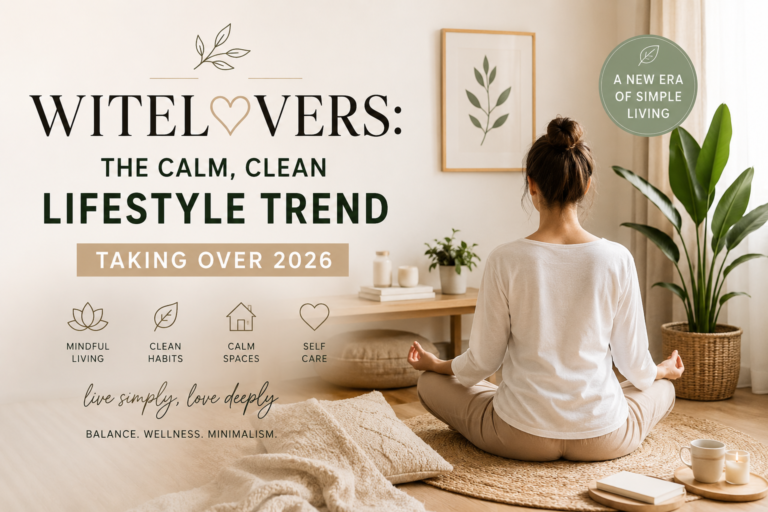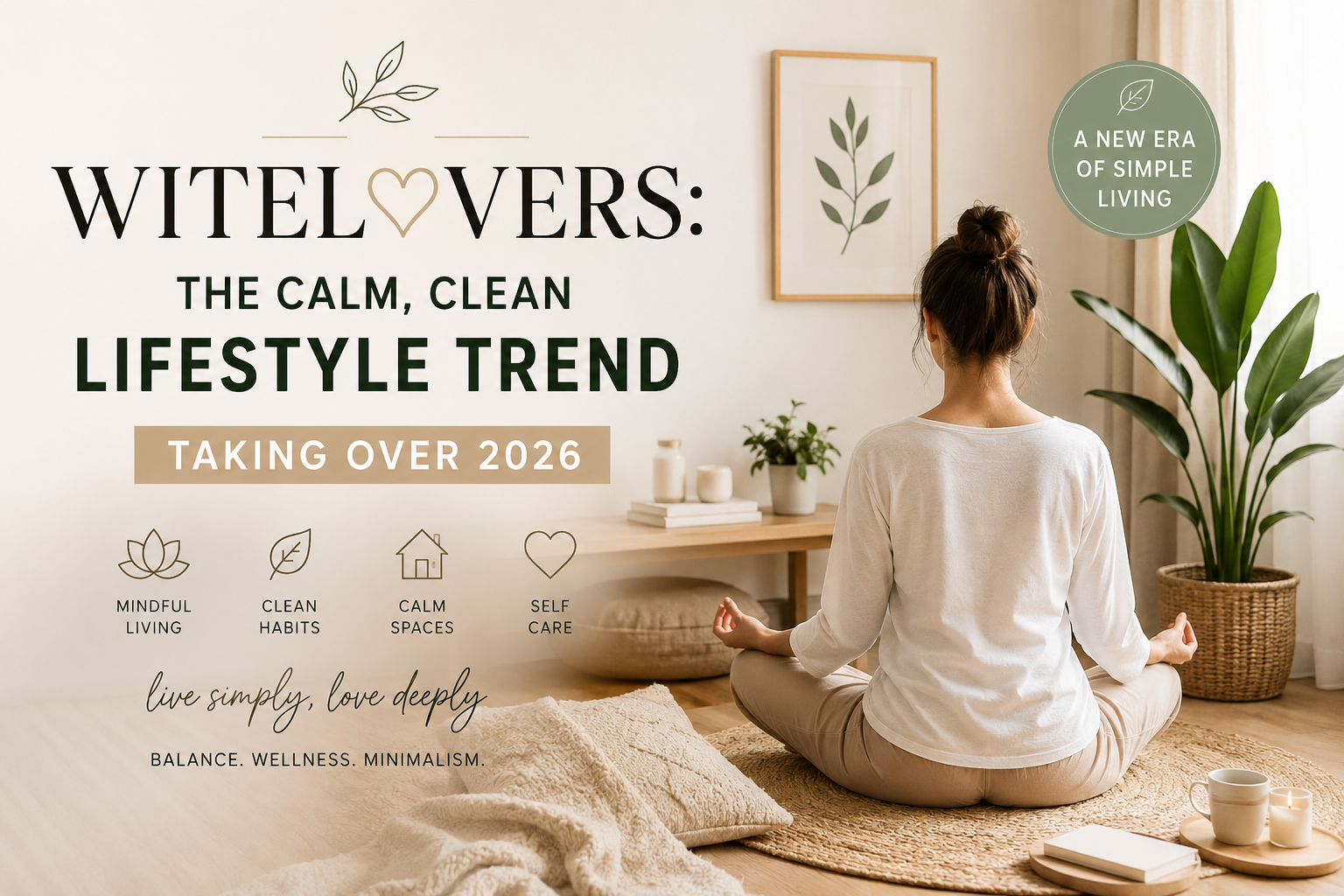
Witelovers is the word people keep running into on Instagram captions, Pinterest boards, and lifestyle blogs, and most of them land on the same question: what does it actually mean? The short answer is that Witelovers describes a calm, clean, white-and-neutral way of living, decorating, and dressing, built around doing less so your surroundings feel lighter. It shows up in tidy rooms, simple outfits, and slow daily routines rather than in one single product or app.
What Is Witelovers?
Witelovers is a lifestyle idea built around calm spaces, simple choices, and a preference for white and neutral tones over clutter and noise. It is not a company, a membership, or a strict rulebook. It works more like a shared style that people adopt in their own way, at their own pace.
At its center is one simple trade: less stuff and less stimulation in exchange for more clarity. A Witelovers home tends to have open counters instead of piled-up items. A Witelovers wardrobe tends to have a handful of pieces that all work together instead of a closet stuffed with one-off outfits. The daily routine tends to move slower, with fewer things competing for attention at once.
None of this requires expensive renovations or a new set of everything. Most people who describe themselves as Witelovers started with one drawer, one shelf, or one morning routine, then let the habit spread outward once they noticed how much calmer that single change felt.
Where Does The Word Witelovers Come From?
The word splits into two familiar pieces: “white” and “lovers.” White has long stood for clarity, freshness, and simplicity in design, from all-white kitchens to blank notebook pages that feel easier to start on than a cluttered one. “Lover” simply signals someone who is drawn to something and shapes part of their life around it.
Put together, Witelovers became a shorthand for people who are drawn to that clean, uncluttered feeling and build parts of their life around chasing it. The term picked up speed on visual platforms first, where a plain white room or a soft neutral outfit photographs well and travels fast between accounts with similar taste.
From there, it moved off Pinterest boards and into everyday conversation, the way “cozy” or “aesthetic” did before it. Nobody needed a formal definition to start using it. It just described a look and a feeling people already recognized when they saw it, so the word filled in the gap.
Witelovers And Minimalist Living
Witelovers and minimalism share a foundation, but they are not identical. Minimalism is mostly about quantity: owning fewer things, keeping fewer commitments, clearing physical and mental space. This trend borrows that same instinct and adds a specific visual mood on top of it.
Where minimalism might leave you with a bare room in any color, the look leans specifically toward white, cream, soft gray, and other light neutral tones. The emphasis sits equally on how few things you own and how those things look and feel together. A minimalist desk might hold one lamp in any finish; a desk styled this way usually holds that same single lamp in a soft, matte white.
Think of minimalism as the underlying discipline and this aesthetic as one particular style built on top of it, the way “cottagecore” takes a general love of nature and gives it a specific, recognizable look. You can be a minimalist without ever touching this look, but most people drawn to it are, whether they use the word or not, already living close to a minimalist routine. That overlap is part of why the two get confused so often, even though only one of them is tied to a specific color palette.
Witelovers Home Decor Style
Home decor is where this look shows up most clearly, and it is usually the entry point for people discovering the trend. Rooms built this way favor white or off-white walls, natural light, and furniture with simple, unfussy lines rather than heavy ornamentation.
Surfaces stay mostly clear. A kitchen counter styled this way might hold one wooden cutting board and a small plant rather than a row of appliances and mail. A bedroom in this style favors plain white or linen bedding over patterned sets, and a single piece of art on the wall instead of a gallery of frames competing for attention.
Texture does most of the work that color and pattern would normally do. Woven baskets, raw wood, linen curtains, and a stone vase all sit comfortably inside a white room without making it feel cold, because each material still carries its own warmth even in a pale palette. That balance between simple and warm, rather than simple and empty, is what separates a well-done Witelovers room from one that just feels bare and unfinished.
Witelovers Fashion And Personal Style
Fashion is the second place this look consistently appears, and it follows the same logic as the home decor side of the trend. Outfits lean toward white, cream, beige, and soft gray, built from a small number of pieces that all pair easily with each other.
A typical outfit in this style might be a plain white shirt, straight-leg trousers in a neutral tone, and simple leather or canvas shoes, with no bold prints or clashing colors competing for attention. The point is not to look plain for its own sake, but to remove decision fatigue: when every piece in your closet already works with every other piece, getting dressed stops being a daily puzzle.
This approach also tends to save money and closet space over time, since a small, coordinated wardrobe gets worn far more often than a large one full of pieces that only match one or two other things. People who adopt this style often report reaching for the same five or six items on repeat, and feeling more put-together for it rather than less put together.
Witelovers On Social Media
Social media is the engine behind how fast this aesthetic has spread, particularly on visually driven platforms like Instagram and Pinterest. A photo of a sunlit white room or a simple neutral outfit performs well in a feed, because it reads as calm and put-together in a single glance, without needing a caption to explain it.
Accounts built around this aesthetic tend to post slowly and consistently rather than chasing every trend at once, which fits the same “less but better” philosophy the lifestyle is built on. Viewers scrolling past louder, more chaotic content often stop on a post like this simply because it gives their eyes a break.
That contrast is a large part of why the aesthetic keeps gaining new followers. Feeds are crowded with color, motion, and competing messages, so a quiet white frame stands out precisely by doing less, not more. It becomes the visual equivalent of a deep breath in the middle of a noisy scroll, which is a large part of why it keeps spreading between accounts that would otherwise share little in common.
Why Witelovers Is Becoming Popular In 2026
This lifestyle is gaining ground in 2026 because it answers a specific kind of fatigue: too many choices, too much noise, and too little visual or mental rest. Streaming apps, group chats, and endless product options all pull attention in different directions at once, and a calm, pared-down lifestyle offers a clear counterweight to that.
The aesthetic is also easy to start small. Unlike a full home renovation or an expensive capsule wardrobe overhaul, someone curious about it can clear one shelf or wear one neutral outfit and immediately feel the difference, which lowers the barrier to trying it compared with more demanding lifestyle trends.
Curiosity about the word itself adds another layer. Because Witelovers is short, easy to say, and slightly unfamiliar the first time you see it, people search it out of pure interest, then discover a lifestyle that already matches something they were quietly drawn to before they had a name for it at all.
Benefits Of The Witelovers Lifestyle
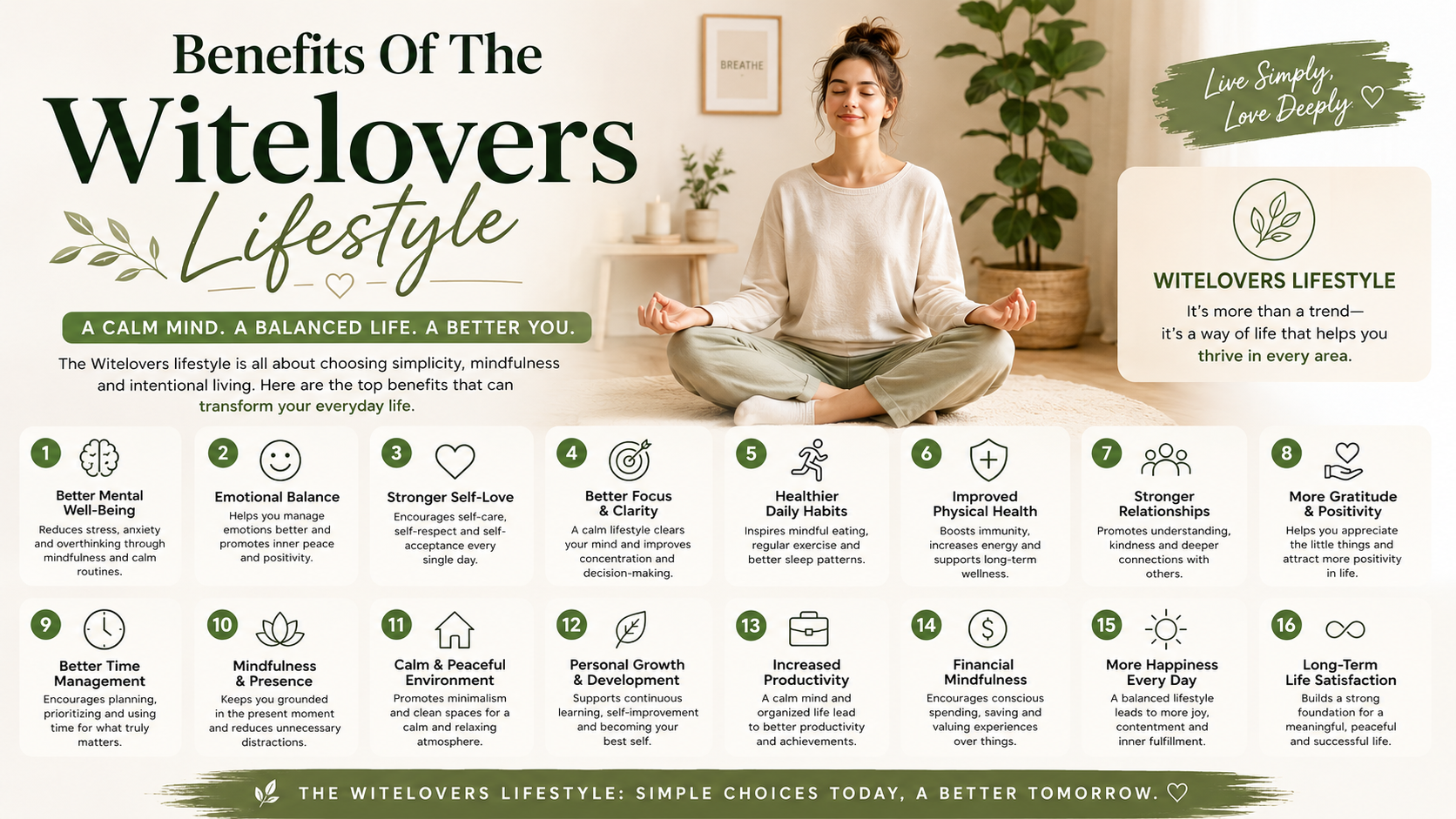
The most commonly reported benefit of living this way is a drop in everyday visual stress. A room with fewer competing colors and objects gives your eyes, and by extension your mind, fewer things to process at once, which many people describe as an immediate sense of relief.
Focus tends to improve for the same reason. A clear desk with one lamp and one notebook is easier to concentrate at than one buried under stacked papers and half-used objects. Decision fatigue also drops, since a smaller wardrobe and simpler home setup mean fewer small choices to make before you even start your day.
There is a financial upside too. Buying fewer, better-matched pieces for your home or closet usually costs less over a year than replacing a constant stream of mismatched items, even though a single well-made piece may occasionally cost more upfront than a disposable alternative would.
Problems And Misunderstandings About Witelovers
The most common misunderstanding about this lifestyle is assuming it means everything has to be pure white and completely empty. In practice, the aesthetic includes cream, beige, soft gray, and natural wood tones, and a well-balanced room built this way almost always keeps a few warm textures rather than stripping a space bare.
Overdoing the style is a real risk. A room with nothing but white surfaces and no texture at all can feel cold or sterile instead of calm, which defeats the purpose. The fix is usually simple: add one or two natural materials, like a wood shelf or a woven rug, rather than removing more.
Cost can also be a barrier if someone tries to replace everything at once. Quality neutral furniture and clothing are not always cheap, and chasing a finished look in one weekend often costs more than easing into it gradually. Starting with a single room, drawer, or outfit avoids that trap entirely, and it is the approach most long-term Witelovers seem to settle on.
How To Start The Witelovers Lifestyle
Starting this lifestyle does not require redoing your whole home or wardrobe at once. The easiest entry point is picking one space, usually a desk, a shelf, or a single drawer, and clearing it down to only what you actually use.
From there, shift new purchases toward white, cream, and neutral tones rather than replacing everything you already own. A single new lamp, a plain duvet cover, or one neutral sweater is enough to start building the look without a big upfront cost or a wasted closet full of discarded color.
Pair the physical changes with one simple daily habit, like spending five minutes tidying a surface before bed or picking your outfit the night before from a small rotation of pieces. These small routines are what turn the aesthetic from a look you copied once into a lifestyle that actually holds up day to day, week after week.
Witelovers Home Setup Tips
A few practical choices make a setup like this feel calm rather than bare. Start with light control: sheer white curtains let in natural light without harsh glare, and that light does more to make a room feel airy than any paint color alone.
Keep one or two natural textures in every room, such as a wooden side table, a woven basket, or a linen throw, so the space reads as warm instead of sterile. Store daily items in closed cabinets or baskets rather than leaving them on open shelves, since visible clutter undoes the calm effect even in an otherwise neutral room.
Finally, resist adding decor just to fill empty space. A blank wall or open corner is not a problem to solve; in this approach, it is doing exactly what it is supposed to do, giving your eyes, and your mind, somewhere to rest for a moment.
Challenges Of Keeping The Witelovers Look
Maintaining a space styled this way is harder than creating it once, since daily life constantly reintroduces clutter, mismatched items, and stray colors. Mail piles up, gifts in the wrong tone arrive, and a busy week can undo a tidy shelf in a single afternoon.
The households that keep the look long-term usually build in a quick reset, such as a five-minute end-of-day tidy or a designated spot for anything that does not fit the neutral palette yet. Without that habit, the space slowly drifts back toward its earlier, more cluttered state.
Fashion carries a similar challenge, since a small neutral wardrobe needs more careful laundry and repair habits to stay looking fresh, unlike a larger closet where a stained or worn piece can simply be swapped out. Investing in slightly higher-quality basics usually solves this, since they hold their color and shape longer than cheaper alternatives would.
The Future Of Witelovers Beyond 2026
This lifestyle looks likely to keep growing rather than fade quickly, because it is tied to a lasting need for calm rather than a single product or platform. As long as digital life stays loud and cluttered, a quiet, neutral counterpoint will keep finding new followers looking for relief from it.
The style may keep evolving in small ways, picking up new textures, materials, or regional twists as more people adapt it to their own homes and budgets. That flexibility is part of why it has spread as fast as it has: nobody needs permission or a specific product line to start, only a willingness to remove a little and simplify a little more.
Even if the word Witelovers itself eventually fades the way internet terms often do, the underlying habit, choosing calm, uncluttered spaces and simple, coordinated wardrobes, is likely to stick around under whatever name comes next.
Conclusion
Witelovers is a calm, clean lifestyle built around white and neutral tones, simple wardrobes, and uncluttered spaces that give your mind room to rest. It borrows from minimalism but adds its own soft, specific visual identity, and it spreads easily because anyone can start with one shelf, one outfit, or one small habit. Whether you adopt the full aesthetic or just borrow a few of its habits, the core idea behind Witelovers, doing less so the rest feels lighter, is easy to test for yourself starting today.
Frequently Asked Questions (FAQs)
What does Witelovers mean in simple words?
Witelovers describes a calm, clean lifestyle built around white and neutral tones in your home, wardrobe, and daily routine. It focuses on removing clutter and simplifying choices so your surroundings and your day both feel lighter and easier to manage.
Is Witelovers only about the color white?
No. While white is the most visible part of the aesthetic, Witelovers also includes cream, beige, soft gray, and natural wood tones. The core idea is calm and simplicity, and the color palette is simply the most common way people express it.
How is Witelovers different from minimalism?
Minimalism focuses mainly on owning fewer things in any style. Witelovers keeps that same reduction but adds a specific soft, neutral look on top of it, making it closer to a particular aesthetic built on minimalist habits rather than a separate philosophy.
Can anyone start following the Witelovers lifestyle?
Yes. There is no membership, cost, or fixed starting point required. Most people begin with one small change, like clearing a single shelf or buying one neutral piece of clothing, then expand the habit gradually from there.
Why is Witelovers so popular on social media in 2026?
Clean, neutral visuals stand out in feeds crowded with color and noise, giving viewers a quick visual break. That contrast, combined with how easy the look is to photograph, has made Witelovers spread quickly across Instagram and Pinterest.
What are the biggest benefits of the Witelovers lifestyle?
People commonly report less visual stress, better focus, and fewer daily decisions once their space and wardrobe are simplified. A smaller, coordinated set of belongings also tends to save money compared with constantly replacing mismatched items.
What mistakes do people make when trying Witelovers decor?
The most common mistake is stripping a room of all texture and color, which can feel cold rather than calm. Keeping one or two natural materials, like wood or linen, alongside the neutral palette keeps the space feeling warm instead of empty.
Will the Witelovers trend last, or is it temporary?
The underlying habit of choosing calm, uncluttered spaces over clutter and noise is likely to continue regardless of whether the specific word stays popular. Even if the term fades, the lifestyle it describes fits a need that is not going away soon.
About the Author