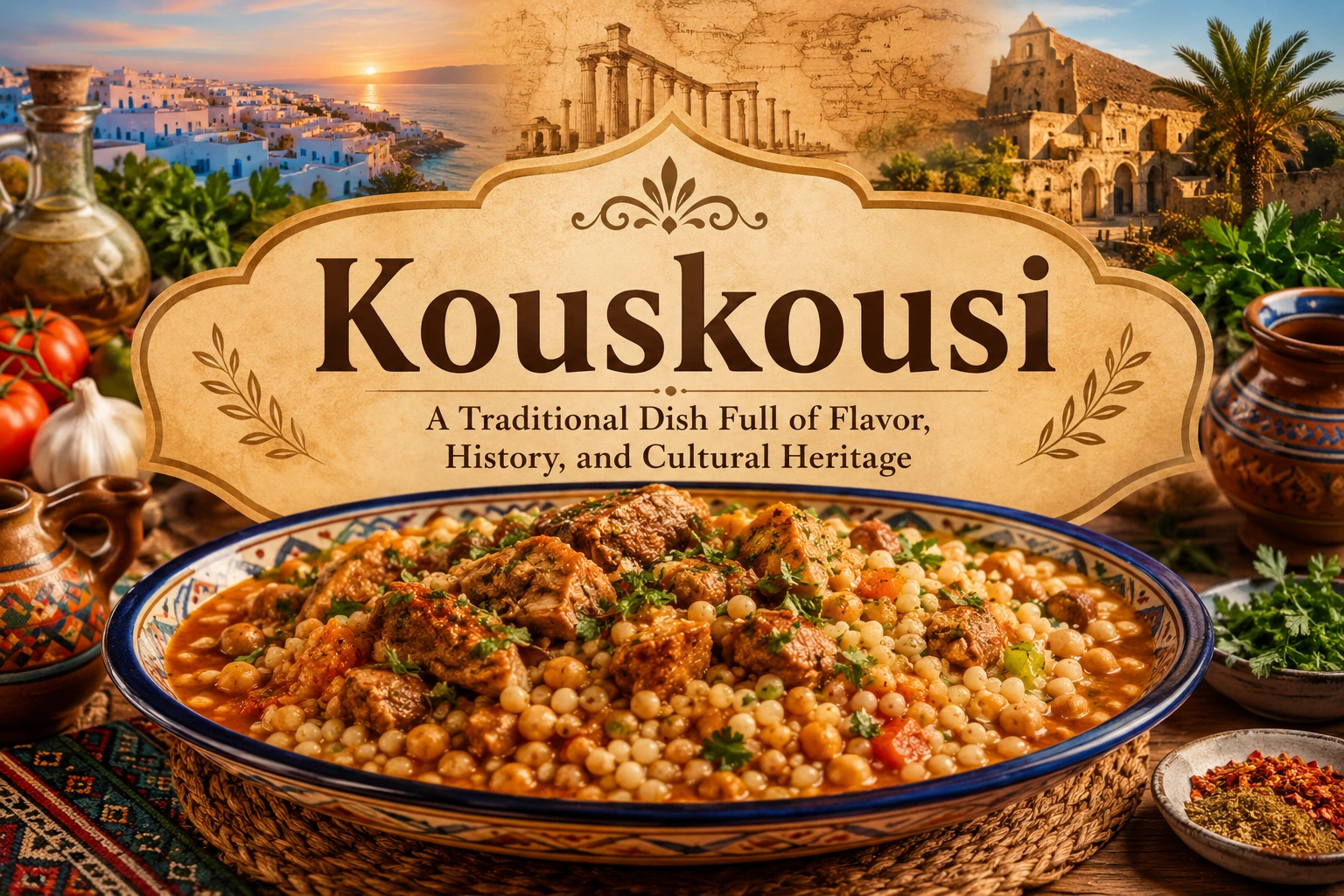
Kouskousi is a traditional Mediterranean and North African dish that combines simple ingredients with centuries of culinary heritage. It is known for its comforting texture, rich flavor, and deep connection to family gatherings and regional celebrations. Although recipes differ from one community to another, the heart of kouskousi remains the same: a nourishing meal prepared with patience, fresh ingredients, and time-honored cooking methods.
For many people, kouskousi is more than food. It reflects local traditions, seasonal ingredients, and the customs passed from one generation to the next. Whether served during family dinners or special occasions, the dish continues to hold an important place in traditional kitchens. Its growing popularity has also introduced it to food lovers who enjoy exploring authentic regional cuisine.
What Is Kouskousi?
Kouskousi is a traditional dish commonly associated with Mediterranean cooking, particularly within communities that have preserved centuries-old recipes. It often features small pasta or grain-like pieces combined with legumes, vegetables, herbs, and sometimes meat or seafood depending on local customs. The exact preparation changes from one region to another, giving every family its own version.
Unlike many modern recipes that rely on convenience, kouskousi is usually prepared slowly. Ingredients are layered carefully so that each flavor develops naturally during cooking. This gradual method produces a rich, comforting meal that feels both filling and balanced.
Many people compare kouskousi with couscous because of their appearance. However, they are different dishes with unique ingredients, cooking techniques, and cultural histories. While couscous is made from steamed semolina granules, kouskousi often includes handmade pasta pieces or other traditional regional variations.
Its popularity has expanded beyond its original communities as more people search for authentic foods that carry genuine cultural stories rather than modern food trends.
The History Behind Kouskousi
The roots of kouskousi stretch back through generations of Mediterranean cooking traditions. Families prepared it long before recipes were written in cookbooks, relying instead on knowledge shared through everyday cooking and seasonal celebrations.
In coastal communities, seafood often became the main ingredient because fresh catches were available daily. Inland villages preferred lamb, chicken, beans, or locally grown vegetables. These regional differences allowed the recipe to evolve naturally without losing its identity.
Historical migration also influenced how kouskousi developed. As families moved between neighboring countries and islands, they carried their cooking traditions with them. New spices, vegetables, and herbs slowly became part of the recipe while preserving its traditional character.
Many older cooks still prepare the dish using methods learned from parents and grandparents. Hand mixing, slow simmering, and careful seasoning remain common practices even today.
Food historians often describe traditional dishes like kouskousi as examples of living heritage because every meal connects modern families with centuries of culinary experience.
Why Kouskousi Still Remains Popular Today
Many traditional dishes disappear as eating habits change, yet kouskousi continues to attract both older generations and younger food enthusiasts. One reason is its remarkable balance between nutrition, affordability, and satisfying flavor.
People increasingly look for homemade meals instead of heavily processed foods. Kouskousi fits this preference perfectly because it uses familiar ingredients that most kitchens already have available. Fresh vegetables, legumes, herbs, olive oil, and simple seasonings create a wholesome meal without requiring expensive products.
Another reason for its popularity is flexibility. Families can prepare vegetarian versions during certain seasons or include seafood and meat for larger celebrations. This adaptability allows the recipe to suit different dietary preferences while keeping its traditional identity intact.
Social media has also introduced many forgotten regional dishes to international audiences. Home cooks, travel bloggers, and culinary creators frequently share authentic family recipes that encourage people to recreate traditional meals at home.
Restaurants specializing in Mediterranean cuisine have also contributed to renewed interest by placing regional classics like kouskousi alongside more familiar dishes, allowing new diners to discover its distinctive taste.
What Ingredients Make Kouskousi Special?
The beauty of kouskousi lies in its simplicity rather than complexity. Every ingredient contributes a distinct flavor while supporting the overall balance of the dish.
Olive oil provides richness and forms the base for gently cooking onions and garlic. Tomatoes often add sweetness and natural acidity, while herbs such as parsley, mint, or oregano bring freshness. Chickpeas, lentils, or beans increase both texture and nutritional value.
Some traditional recipes include seafood such as mussels, shrimp, or local fish. Others rely on lamb or chicken for additional depth. Regional spices vary widely but frequently include black pepper, cinnamon, bay leaves, paprika, or cumin.
The pasta or grain component absorbs the cooking liquid slowly, allowing every bite to capture the surrounding flavors. Unlike dishes where ingredients remain separate, kouskousi develops a unified taste because everything cooks together over gentle heat.
Fresh seasonal vegetables also play an important role. Carrots, zucchini, pumpkin, peas, spinach, or potatoes may appear depending on availability throughout the year.
The result is a meal that feels hearty without becoming overly heavy, making it suitable for family lunches as well as evening dinners.
About the Author