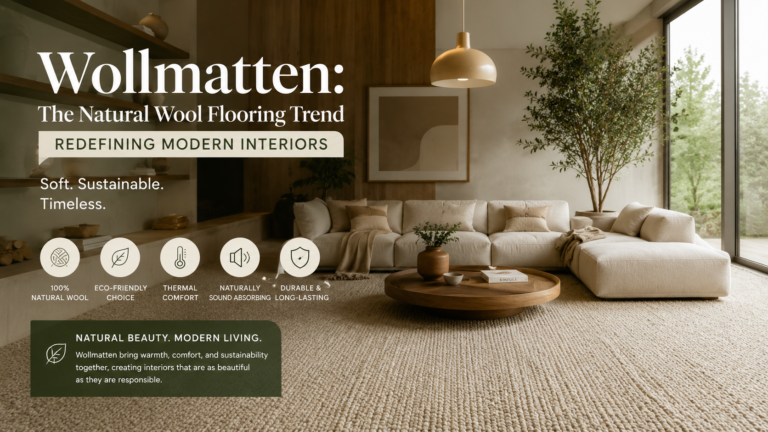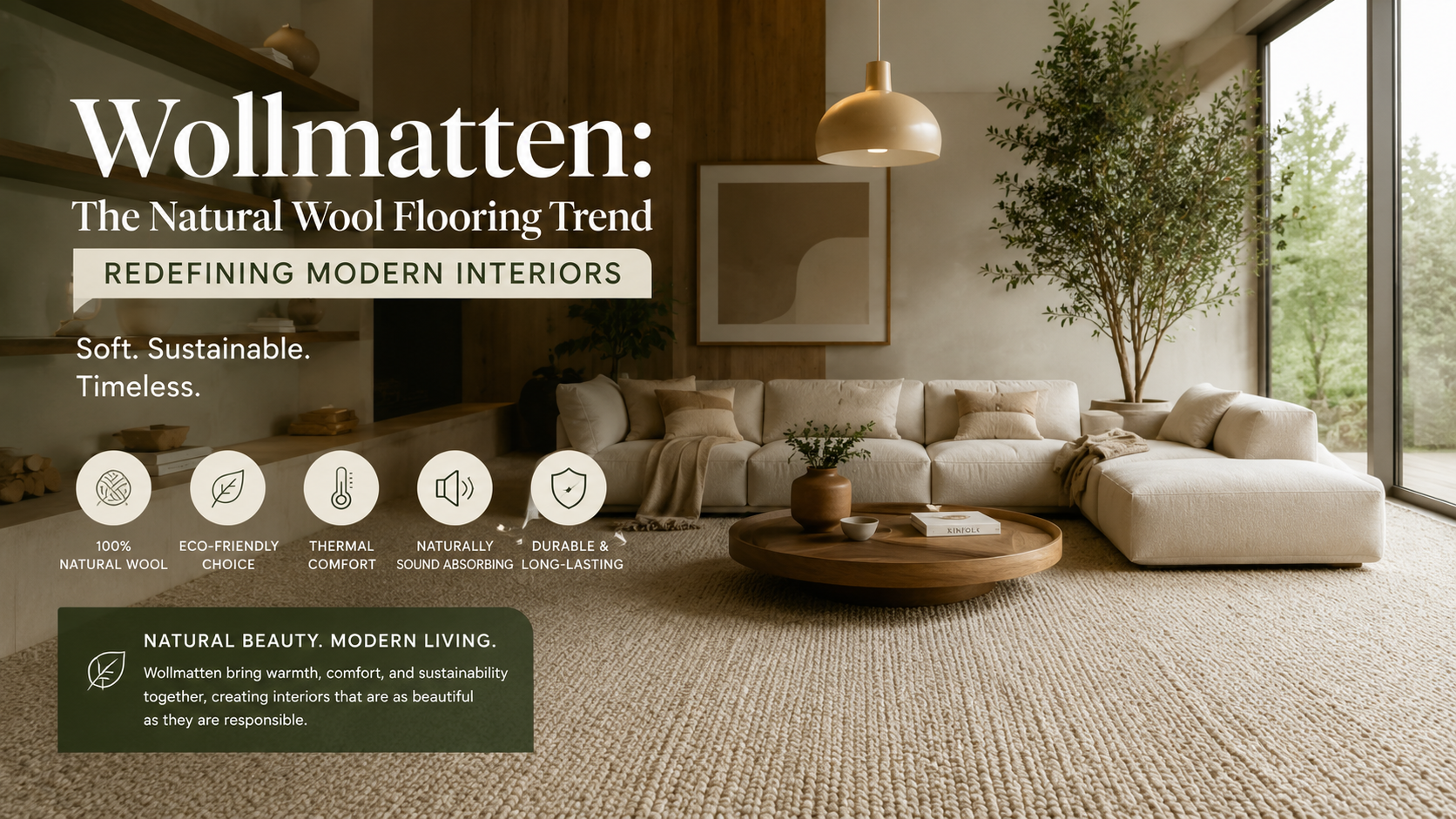
Wollmatten are mats made from natural sheep’s wool, felted, needle-punched, or hand-woven into a dense floor covering. Alpine households have used them for centuries, long before synthetic rugs existed. Today they show up in living rooms, bedrooms, studios, and even garden beds for reasons that go far beyond looks. A single mat can quietly handle warmth, sound, and moisture management at the same time, which is rare for any one piece of home decor. This guide walks through what these mats actually are, how they perform against synthetic alternatives, and how to choose and care for one without wasting money.
What Is Wollmatten?
Wollmatten is the German word for wool mats, and the name describes the product with almost no exaggeration. Woll means wool. Matten means mats. Put together, you get a floor covering built from raw sheep fleece rather than cotton, polyester, or nylon.
Manufacturers turn raw fleece into Wollmatten through one of three main processes. Felting compresses the fibers with heat, moisture, and pressure until they bond without glue. Needle-punching mechanically tangles the fibers into a firm, flat structure. Hand-weaving interlaces cleaned and spun wool yarn on a loom, the way rug makers have done in farmhouses and highland villages for generations.
Each method produces a mat with a different feel underfoot. Felted mats tend to be dense and low-maintenance. Needle-punched versions hold their shape under heavy furniture. Hand-woven pieces are usually the most expensive, and often the most durable, sometimes lasting decades with basic care. None of them rely on synthetic backing to stay flat, which is part of why people keep returning to this material even as cheaper alternatives flood the market. Thickness varies by construction too, typically somewhere between six and twenty millimeters, and thicker mats generally trade a little flexibility for noticeably better insulation and sound absorption.
How Wool Fiber Actually Works
The performance of Wollmatten comes down to the physical structure of the wool fiber itself, not marketing language. Each strand has a natural crimp, a wave built into its shape before it’s ever spun or felted. That crimp creates thousands of tiny air pockets throughout a finished mat.
Air is a poor conductor of heat, so those pockets trap warmth close to the floor. A wool mat placed beside a bed or under a desk stays noticeably warmer underfoot than a synthetic mat sitting in the same spot. This isn’t a coating or a chemical treatment. It’s simply how the fiber is built, and it’s the same reason a wool sweater keeps you warm in freezing weather.
Wool also manages moisture in a way synthetic fibers can’t match. It can absorb close to a third of its own weight in moisture before it starts to feel damp, then slowly releases that moisture back into the air as conditions change. Synthetic fibers like polyester barely absorb any moisture at all, which is why a damp synthetic rug tends to feel clammy long after wool would have dried out. That trait alone explains why wool flooring copes well with both damp winters and humid summers without smelling musty or growing soft underfoot.
Why Wollmatten Insulate Better Than Synthetic Mats
Builders and homeowners increasingly choose Wollmatten as insulation, not just as decoration underfoot. Wool fiber has a genuinely useful thermal resistance value, which is why wool batts and rolls now appear in walls, lofts, and floor cavities alongside more familiar materials.
Heat loss through an uninsulated floor adds up over a winter, and wool insulation reduces that loss by holding still air within the fiber structure. The same trapped air that keeps you warm in a living room also keeps a house warmer in January and cooler in July, cutting the load on heating and cooling systems. Reduced energy use isn’t a side effect here. It’s the main reason many retrofit projects specify wool over foam or fiberglass, even at a higher upfront material cost.
Wool’s elastic quality matters just as much as its warmth. Unlike foam insulation, which compresses and settles over years, wool fiber bounces back after being compressed. A wool mat under a heavy sofa or a wool batt squeezed into a stud cavity keeps most of its loft instead of flattening permanently, which means the insulating performance holds up decades after installation rather than fading within a few winters. Fiberglass, by comparison, can lose a meaningful share of its effectiveness once it settles or gets compressed during a renovation.
The Acoustic Case for Wollmatten
Hard floors bounce sound around a room, and that’s exactly the problem Wollmatten solve without any extra hardware. The same crimped fiber structure that traps heat also disrupts sound waves, absorbing vibration instead of letting it reflect off a bare floor.
Apartments near busy streets benefit noticeably from a wool mat in the main living space, since it cuts down on both airborne noise from outside and footstep noise between floors. Home studios and shared offices see a similar effect. A room with a wool mat on the floor sounds calmer within minutes of walking in, even before anyone notices why. Bare tile or polished concrete can reflect the majority of sound energy that hits it, while a thick wool mat absorbs a meaningful share of that same energy before it bounces back into the room.
Multi-family buildings and open-plan homes are where this shows up most clearly. A single Wollmatten under a dining table won’t silence a building, but it measurably softens the sharp, brittle echo that comes from tile, timber, or polished concrete. Combined with soft furnishings elsewhere in the room, the acoustic difference between a bare floor and one with wool underfoot is easy to notice, even for people who never think about acoustics.
Indoor Air Quality and Wollmatten
Synthetic insulation and synthetic rugs frequently rely on chemical binders, flame retardants, and adhesives that off-gas volatile organic compounds for years after installation. Wollmatten made from 100% wool skip nearly all of that, since the fiber holds its shape without synthetic glue.
Wool also contains lanolin, a natural oil that resists staining and repels some airborne particles before they settle into the fiber. That’s part of why wool mats are a common recommendation for households with allergy sufferers or small children who spend time on the floor. The fiber doesn’t shed microplastics the way polyester or nylon rugs do every time they’re vacuumed or walked on, which keeps both the mat and the air in the room cleaner over its lifespan. Washing a synthetic rug can release thousands of tiny plastic fibers into wastewater, a problem wool simply doesn’t create.
Mold resistance adds another layer of benefit. Because wool regulates moisture instead of trapping it against a surface, Wollmatten in bathrooms, entryways, or basements are less prone to the mildew smell that plagues synthetic bath mats left damp overnight. None of this requires chemical treatment. It’s a property of the raw material, which is one reason wool has stayed in use for thousands of years despite cheaper competitors.
The Sustainability Argument, Examined Honestly
Sustainability claims deserve scrutiny, and Wollmatten mostly hold up under that scrutiny better than most flooring alternatives. Sheep are shorn once or twice a year and the fleece regrows, making wool a renewable resource in the most literal sense rather than a marketing label.
Producing raw wool into a finished wool mat also uses meaningfully less energy than manufacturing synthetic fiber from petroleum feedstock. Wool actively absorbs carbon dioxide from the atmosphere as it grows on the animal, with roughly one kilogram of raw wool capable of holding onto about two kilograms of CO2. When one eventually wears out after decades of use, it breaks down naturally instead of sitting in a landfill for a century the way polypropylene carpet does. Synthetic carpet backing, by contrast, is often made from petroleum-based materials that resist breaking down at all, even after a hundred years underground.
Many manufacturers also use lower-grade wool, unsuitable for clothing, as the raw material for Wollmatten. Rather than discarding that fleece, producers give it a second, durable life as flooring or insulation. That kind of resourcefulness is worth noting for anyone weighing a wool mat against a cheaper synthetic rug that will need replacing within a few years anyway.
Where Wollmatten Work Best in a Home

A Wollmatten earns its keep differently depending on where it sits. In a living room, placed under the front legs of a sofa and extending past the coffee table, it grounds hard flooring and adds real warmth both visually and underfoot. The acoustic benefit shows up here too, since a large mat quiets a room that would otherwise echo.
Bedrooms benefit from a wool mat in a smaller, more personal way. Stepping onto a warm wool surface first thing in the morning, instead of cold tile or timber, is a small daily comfort that people notice within the first week of owning one. Home studios and workspaces see a similar effect, since long hours standing or sitting are easier on a surface with some give and warmth built in. Kitchens work too, provided the mat sits somewhere spills are unlikely, since a small rug in front of a sink or stove takes pressure off the feet during long cooking sessions.
Entryways are a less obvious fit that works surprisingly well. Wool naturally resists ground-in dirt because loose particles tend to sit on the surface of the fiber rather than working down into it, so a Wollmatten by the front door usually needs nothing more than regular vacuuming to stay presentable despite heavy foot traffic.
Wollmatten in the Garden: An Edge Case Worth Knowing
Most people assume Wollmatten belong exclusively indoors, and that assumption misses a genuinely useful outdoor application. Wool mats laid over garden soil suppress weeds, hold moisture around plant roots, and buffer sudden temperature swings the way plastic landscape fabric does, minus the plastic.
As a wool mat breaks down outdoors, it slowly releases small amounts of nitrogen into the surrounding soil, feeding the plants it was placed to protect. Gardeners in wetter climates should expect faster breakdown than those in dry regions, since moisture accelerates decomposition. Most get one to two full growing seasons out of a single mat before it needs replacing, which is a reasonable trade for a fully biodegradable weed barrier around raised beds or newly planted shrubs.
This use case rarely appears in flooring guides because it has nothing to do with interior design, yet it’s one of the clearest illustrations of why wool behaves so differently from synthetic materials. A plastic weed barrier sits in the soil indefinitely, sometimes for generations. A wool mat disappears into it instead, doing one more useful job on the way out.
Choosing the Right Wollmatten
Size is where most buyers go wrong, almost always by purchasing something too small for the space. Measure the room first, then size the Wollmatten so it extends under furniture legs rather than floating awkwardly in the middle of a room with bare floor showing on every side.
Construction type changes both price and performance. Hand-woven mats cost more upfront but tend to outlast cheaper felted or tufted versions by decades with proper care. Felted mats suit high-traffic areas where low maintenance matters more than luxury texture, while tufted or shaggy Wollmatten feel softer underfoot but need more frequent vacuuming since they trap dust more readily in their pile.
Fiber content deserves a direct check before buying. A label claiming 100% wool is worth trusting more than one listing a wool blend, since synthetic content quietly cancels out the breathability, resilience, and biodegradability that make wool flooring worth choosing over ordinary carpet in the first place. Certifications such as OEKO-TEX or NaturePlus offer a third-party check on both material purity and chemical safety, which matters more than a brand’s own sustainability claims on the packaging. Color choice matters practically, too: undyed cream, oatmeal, and warm grey tones hide the odd stray hair or crumb far better than pale white does, and naturally dyed patterns tend to age more gracefully than trend-driven prints.
Myth vs. Reality: The Itchy Wool Concern
A common objection to Wollmatten is the assumption that any wool product will feel scratchy or irritating against skin. That worry mostly comes from confusing floor-grade wool with the fine merino used in clothing, which is a different fiber grade entirely.
Most Wollmatten use coarser outer-coat wool, which behaves differently underfoot than a wool sweater does against bare skin. People who find wool clothing uncomfortable against sensitive skin frequently have no issue at all standing or sitting on one, since foot soles and the fabric of trousers or socks tolerate a coarser texture far better than forearms or necks do. Anyone still unsure should handle a sample in person before ordering online, since written descriptions like “soft” vary enormously between listings and sellers, and photographs never convey texture accurately.
Caring for and Maintaining Your Wollmatten
Maintenance for Wollmatten is simpler than most new owners expect, provided a few basics are followed consistently. Vacuum regularly using low to medium suction, and skip the beater bar attachment, since aggressive brushing pulls at wool fibers over time and gradually loosens the felt or weave structure holding the mat together.
Spills need a quick response rather than a scrub. Blot liquid immediately with a dry cloth instead of rubbing, since rubbing drives the spill deeper into the fiber and makes it harder to lift out later. Wool’s natural lanolin content buys some time before a spill sets in, but speed still matters more than force. Rotate the mat every few months so foot traffic wears the fiber evenly instead of concentrating in one well-worn path near a doorway or a favorite chair.
Storage causes more damage to Wollmatten than daily use does. Roll a mat for storage rather than folding it, since folds create creases and weak points that are difficult to reverse once they set. Cedar blocks or dried lavender placed nearby help deter moths, which are drawn to undisturbed wool left in dark storage far more than to a mat in daily use on an open floor. A breathable cotton bag works better than sealed plastic for long-term storage, since trapped moisture inside plastic can encourage mildew even in a naturally moisture-resistant fiber.
Common Mistakes People Make With Wollmatten
Harsh chemical cleaners cause more damage to Wollmatten than almost any other single mistake, since strong detergents strip the natural lanolin that gives wool its stain resistance in the first place. A mild, wool-specific detergent, tested on a hidden corner first, handles nearly every spill a household mat will encounter.
Soaking is another frequent error. Submerging a wool mat in water to deep-clean it can distort its shape permanently, since wet wool stretches under its own weight far more than dry wool does. Direct sunlight causes a slower but equally permanent problem, gradually fading dyed colors over months of exposure near an uncovered window.
Neglect does the rest of the damage on its own. Skipping regular vacuuming lets dirt work down into the base of the fiber, where it abrades the wool from the inside with every footstep. A mat that’s vacuumed weekly and rotated occasionally will outlast one that’s left untouched for years, even though both started out identical. Small habits, repeated consistently, matter more here than any single deep-cleaning session ever will.
Conclusion
Wollmatten combine a genuinely old material with a set of practical benefits that synthetic flooring still hasn’t matched. The natural crimp in wool fiber traps warmth, absorbs sound, and manages moisture without any chemical treatment, while the material itself biodegrades fully at the end of its working life. Choosing a well-made Wollmatten, checking the fiber content honestly, and following a few simple care habits will keep it performing for decades rather than years. For anyone weighing natural materials against synthetic alternatives in a home, wool mats remain one of the more evidence-backed choices available.
Frequently Asked Questions
Are Wollmatten warmer than regular rugs?
Yes. The natural crimp in wool fiber traps far more still air than flat synthetic fibers do, so a wool mat placed on tile or timber feels noticeably warmer underfoot than a comparable synthetic rug in the same spot, without any added backing or heating element.
Can Wollmatten go in high-traffic entryways?
Yes, provided the mat is 100% wool. Wool naturally resists ground-in dirt because particles sit on the fiber surface rather than embedding into it, so regular vacuuming usually keeps an entryway mat looking presentable despite heavy daily foot traffic and muddy shoes.
Do Wollmatten attract moths?
Only in storage. A mat left folded in a dark, undisturbed space for a season is more vulnerable than one in daily use on an open floor. Cedar blocks or dried lavender nearby reduce the risk considerably during off-season storage.
How long does a quality Wollmatten last?
A hand-woven Wollmatten with proper care, including regular vacuuming, prompt spill blotting, and periodic rotation, can last several decades. Felted or needle-punched versions typically last somewhat less, though still well beyond most synthetic rugs sold at a similar price.
Is Wollmatten suitable for people with allergies?
Generally yes. Wool resists dust mites better than many synthetic fibers and doesn’t off-gas the volatile organic compounds found in some synthetic-backed rugs. Households with allergy sensitivities often find a 100% wool mat more comfortable than synthetic alternatives, especially in bedrooms.
Can Wollmatten be used outside on soil?
Yes, as a biodegradable weed barrier. Wool mats placed over garden soil suppress weeds, retain moisture, and slowly release nitrogen as they decompose, typically lasting one to two growing seasons before breaking down fully into the soil they were protecting.
About the Author